Brendan Widmer
Welcome to my conversion rate optimization (CRO) portfolio. I build online storefronts, product experiences, and digital commerce systems that convert visitors into valuable customers.
Optimization Initiatives and Case Studies
Improving full funnel metrics through qualitative and quantitative analysis and hypothesis formation to help ecommerce brands sell more with better user experiences.
Case 1) The Best Pricing: Outpacing Lower Volume with Higher Value.
We executed a highly complex pricing test, increasing the cost of our top-performing product by 13%. To protect brand trust and ensure legal compliance, we dynamically segmented out users arriving from active marketing campaigns that displayed the original price. This thorough, site-wide implementation required synchronizing variant price data across every consumer touchpoint, including collection pages, PDPs, cross-sell modules, and customer subscription portals. While the price hike caused a predictable drop in One-Time Purchase (OTP) conversion rates, the net financial impact was overwhelmingly positive, as the substantial lifts in Average Order Value (AOV) and Customer Lifetime Value (LTV) far outpaced the minor volume loss.
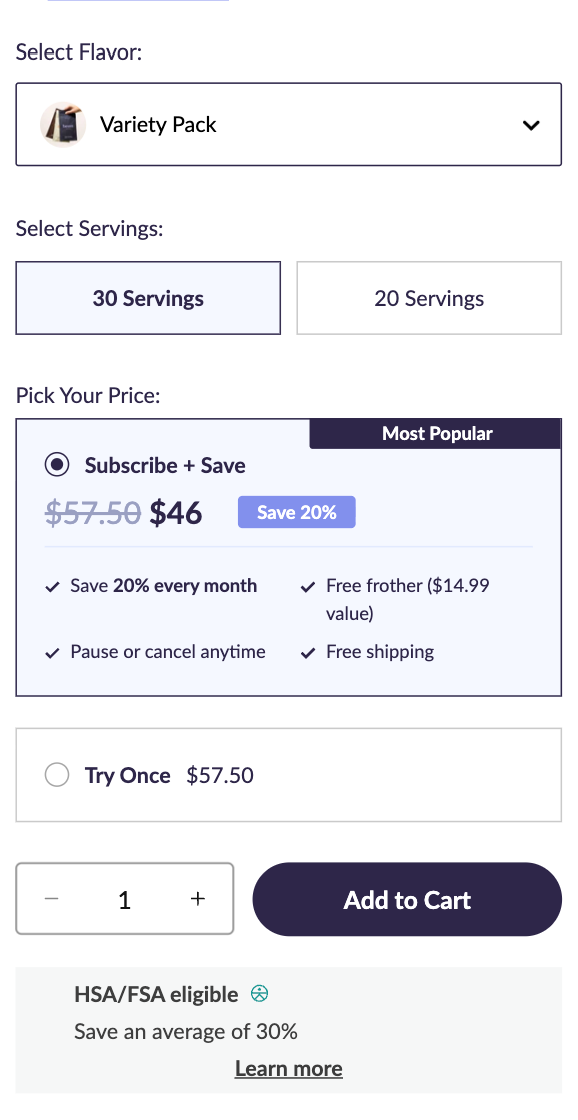

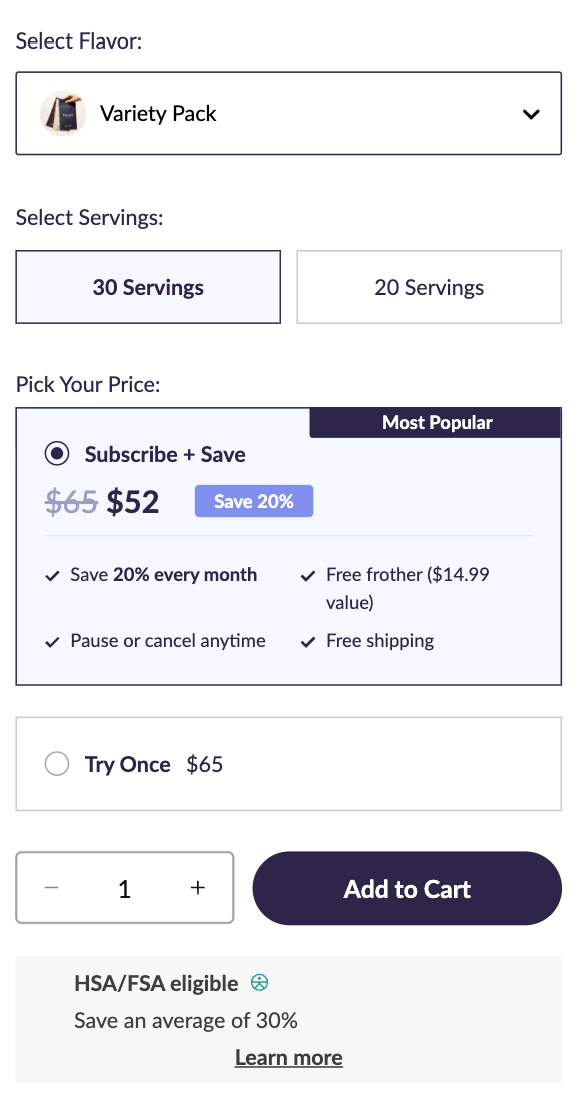
- The Challenge (The Underpriced Product)
- The Goal: Uncover the price elasticity of our core product to maximize revenue per user.
- The Compliance Risk: Potential legal and trust issues stemming from deceptive pricing if users saw conflicting costs.
- The Safeguard: Built strict audience segmentation rules. Users tracking from active ad campaigns or emails listing the old price were completely excluded from the test group.
- The Hypothesis
- The Theory: Our hero product possesses strong brand equity and consumer loyalty.
- The Expectation: Even if a 13% price increase deters casual, price-sensitive shoppers, the increased margin from committed buyers will generate higher net profitability.
- The Implementation (Site-Wide Synchronization)
- The Complexity: This was not a simple, isolated PDP change; it required a thorough, cross-functional engineering effort.
- The Variant Alignment: To maintain a cohesive user experience and prevent checkout errors, variant data had to be dynamically updated simultaneously across multiple systems.
- The Trade-Off (The Results)
- The Downside: One-Time Purchase (OTP) conversion rates experienced a measurable negative impact.
- The Upside: The higher baseline price immediately forced a dramatic surge in Average Order Value (AOV).
- The Long-Term Win: Customer Lifetime Value (LTV) scaled proportionally, proving that the revenue gained per customer significantly outweighed the minor dip in total transaction volume.
Case 2) Friction Reduction: Removing the Collection Page to Drive Revenue.
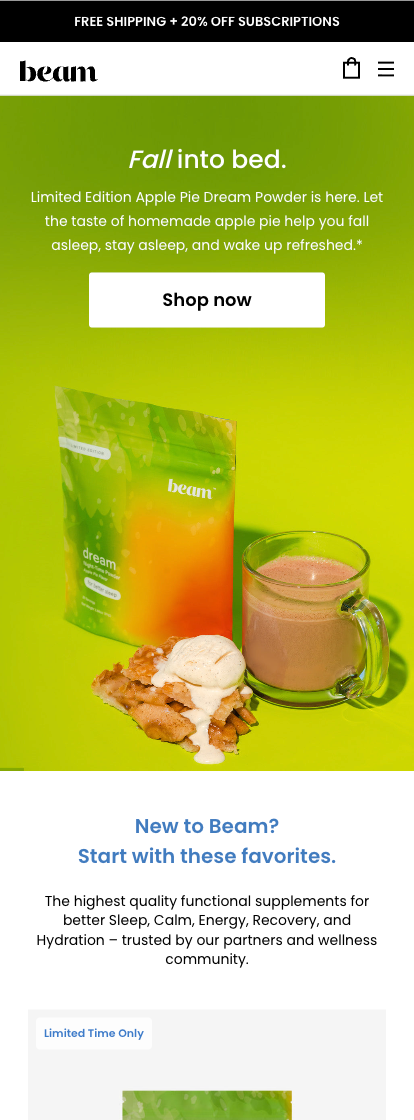
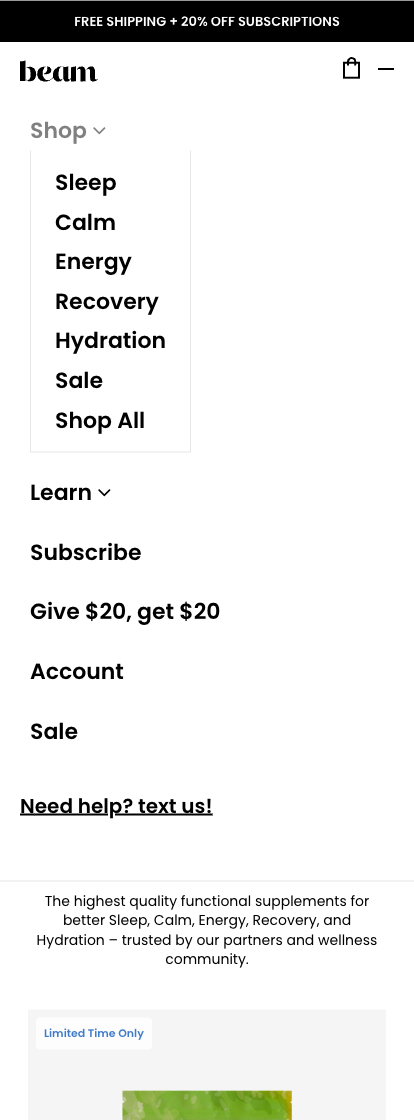
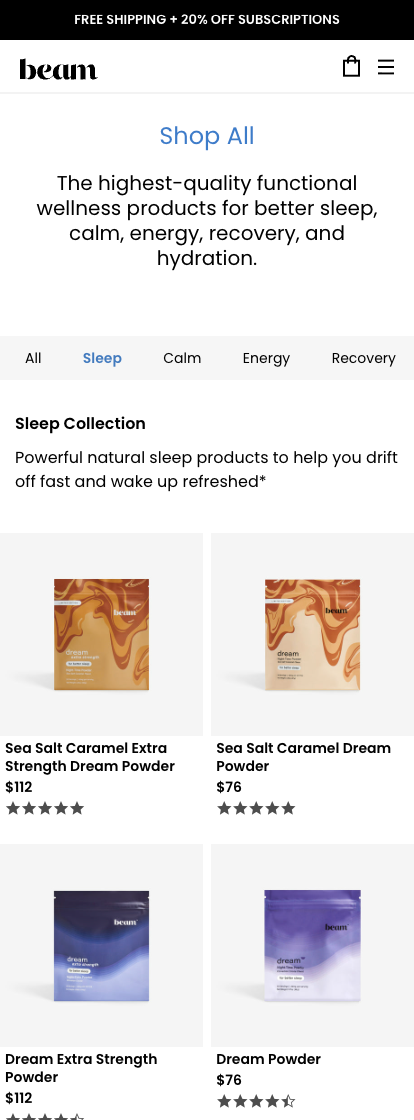
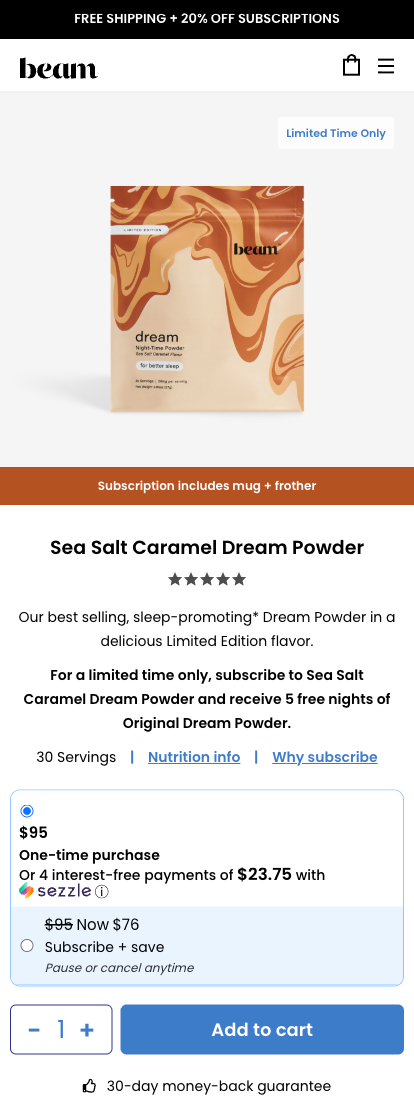
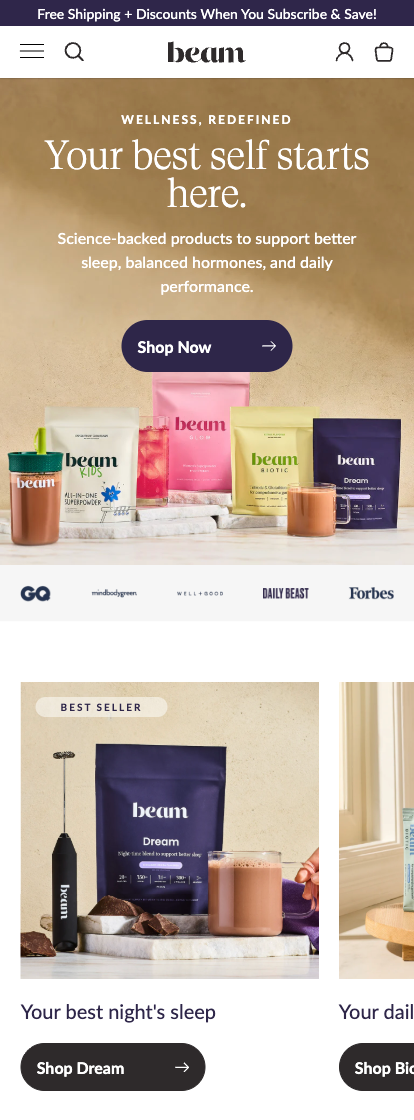
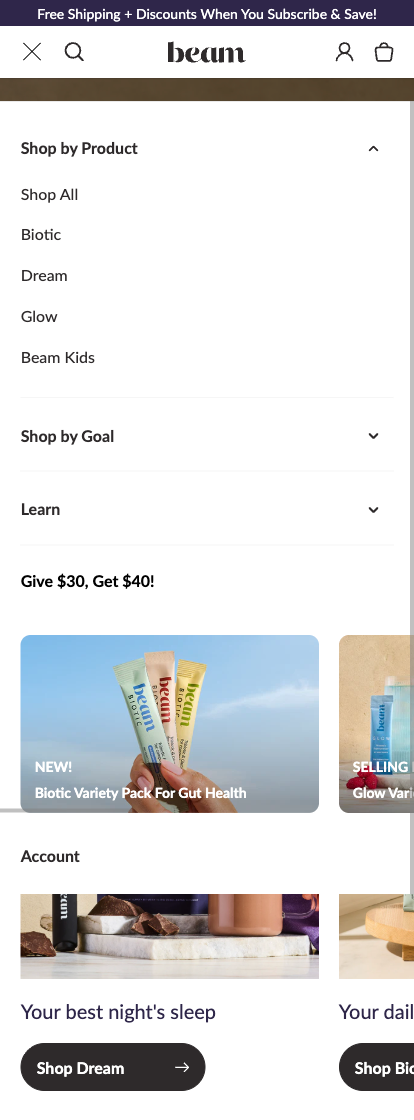
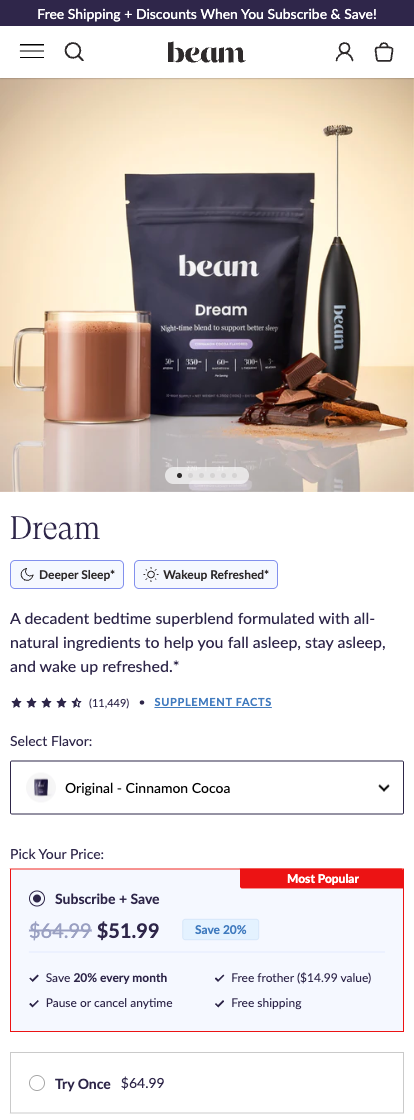
We optimized an e-commerce purchase journey by bypassing the traditional category-level gateway. Instead of routing traffic to a multi-flavor collection page, we directed users straight to the Product Detail Page (PDP) equipped with a flavor selector. This friction-free path shortened the funnel, minimized decision fatigue, and significantly accelerated checkout velocity.
- The Challenge (The Friction Point)
- The Baseline: Users navigated from marketing assets or the homepage to a flavor collection page.
- The Friction: This extra step forced users to browse a grid before reaching an actionable buy button.
- The Risk: Every additional click in an e-commerce funnel introduces a drop-off point.
- The Hypothesis
- The Theory: Eliminating the intermediary collection page removes a non-essential step in the user journey.
- The Expectation: Allowing users to evaluate and select flavors directly on a unified PDP will reduce cognitive load, shorten the time-to-purchase, and increase overall conversion rates.
- The Solution (The Execution)
- The Pivot: Sunsetted the multi-flavor collection page as the primary traffic destination.
- The UX Change: Consolidated all flavor options into a clean, intuitive selector variant module directly on the PDP.
- The Resulting Flow: Traffic lands directly on the PDP → Selects flavor variant → Adds to cart → Checks out.
Case 3) Humanizing the PDP: How On-Screen Video Reviews Built Trust and Boosted Conversions.
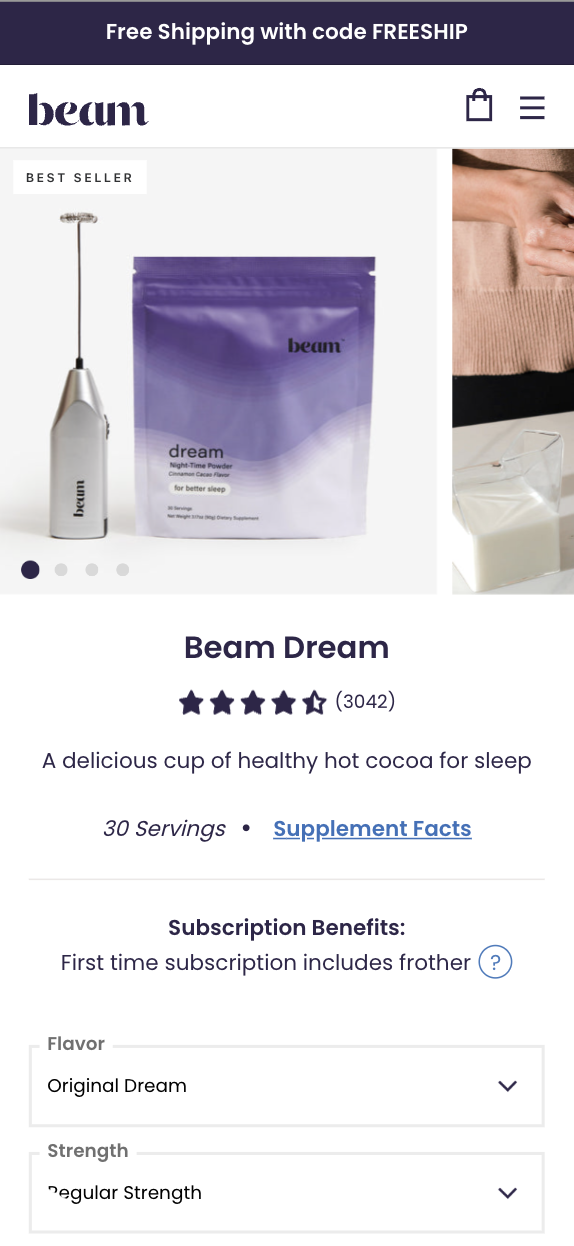
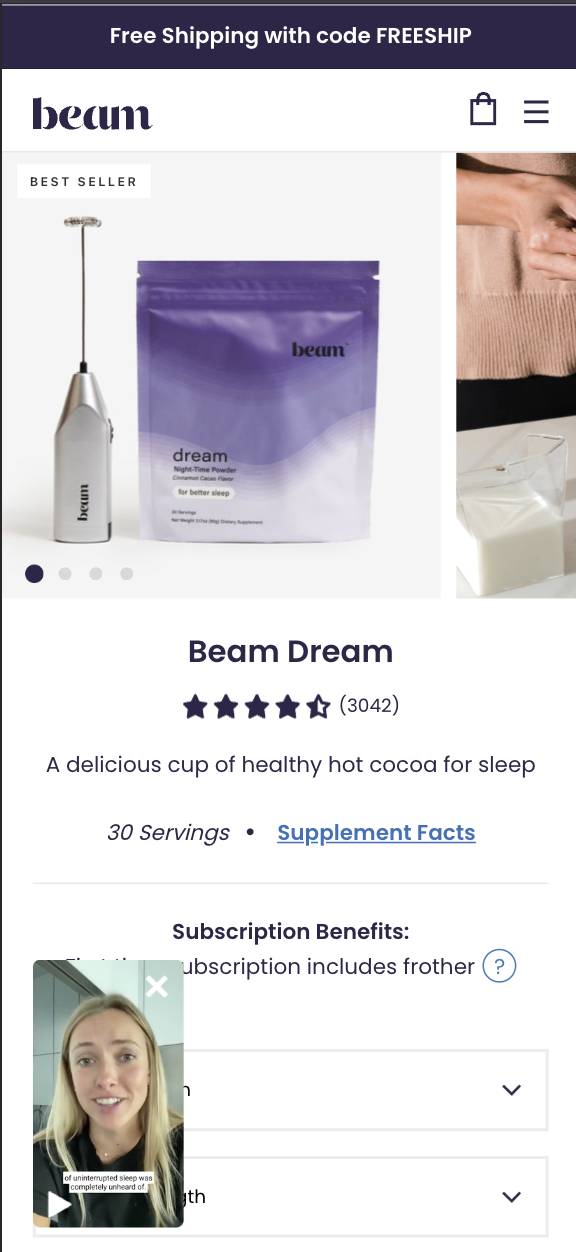
To address a lack of easily accessible social proof on our Product Detail Pages (PDPs), we introduced an interactive, user-generated video review popup. The feature allowed shoppers to view an authentic customer review or minimize it out of view to preserve a clean browsing experience. By adding this high-trust, human element directly to the consideration phase, we successfully reduced buyer hesitation, increased user engagement, and elevated overall conversion rates without disrupting the core shopping funnel.
- The Challenge (The Trust Deficit)
- The Baseline: High-intent traffic reached the PDP, but the page lacked immediate, visible, and high-impact social proof.
- The Friction: Traditional text reviews required users to scroll below the fold, causing a drop-off in trust-building opportunities for fast-scrolling shoppers.
- The Goal: Find a way to surface compelling, authentic user-generated content (UGC) early in the decision-making process without cluttering the page design.
- The Hypothesis
- The Theory: Video-based social proof is highly persuasive and mimics word-of-mouth recommendations far better than written text.
- The Expectation: Giving hesitant buyers immediate access to a real human face and unfiltered review will validate the product’s quality, lower perceived purchase risk, and increase conversion velocity.
- The Solution (The Interactive Widget)
- The Execution: Implemented a lightweight, interactive video review popup featuring a real customer using and endorsing the product.
- The UX Design: Prioritized user control by making the video non-intrusive. Shoppers could proactively maximize the video to watch the review with sound, or minimize/dismiss it into a small floating icon to keep browsing.
Projects
Here are a selection of ecommerce organizations I have worked with: